

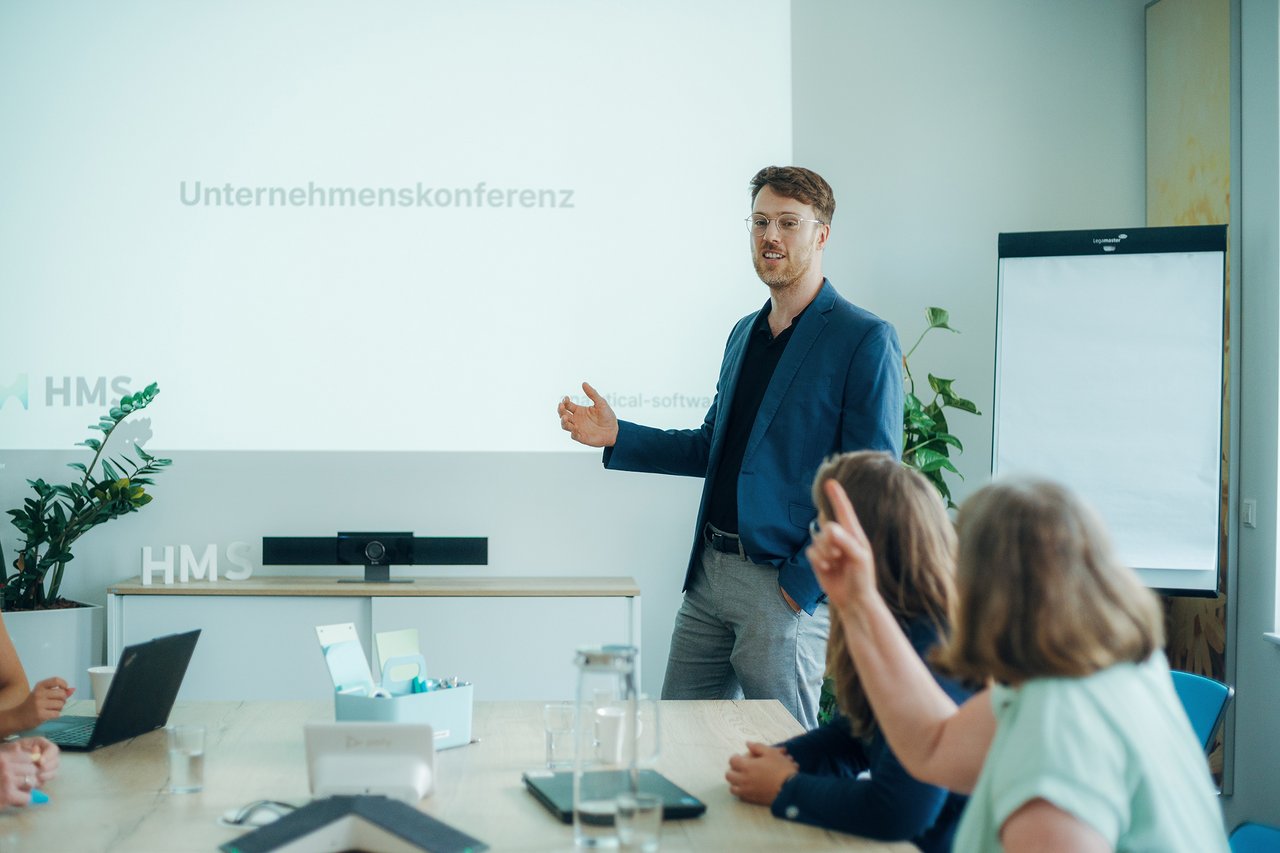

RAG Workshop for Developers

#industry #finance #lifesciences #other

Buildinging a Retrieval-Augmented Generation (RAG) System

Develop a RAG prototype in Python that retrieves relevant documents and uses them as context to generate responses. During the workshop, you will implement the complete workflow and examine how the retrieved content influences the results.

Request the workshop now

In this workshop, participants will build a RAG prototype that answers queries using information from an extensive text database. They will create an embedding-based search index and provide relevant document excerpts as context for response generation.

Who is this workshop for?
The workshop is intended for developers with little or no practical experience with large language models (LLMs) and a basic knowledge of Python.

Learning Objectives

Build and test a complete RAG workflow

You will prepare text data for search, create an embedding-based index, and connect the retrieval process to a large language model. You will then examine which documents the system retrieves and how they influence the generated responses.

Understand the fundamentals of RAG

Learn how retrieval and large language models work together and why external documents are used as context.

Prepare documents for retrieval

Load text data, divide it into sections, and generate embeddings for a search index.

Implement a RAG workflow

Build the complete process, from the user query and document retrieval to the generated response.

Evaluate the results

Review which content the system retrieves and how it influences the generated answer.

Agenda

From 9:00 a.m.: Registration and welcome coffee

10:00 a.m.: Introduction to RAG systems

  • Overview of the components and concepts:
    • Streamlit UI
    • LangChain backend
    • Azure OpenAI
    • Prompting
    • Agents
    • Multimodality
  • Setting Up the RAG Environment
  • Setting Up a Synthetic Company Database

12:30 p.m.: Lunch break

1:30 p.m.: Implementing a RAG prototype using the components introduced

4:30 p.m.: Testing the RAG prototype

Approx. 5:00 p.m.: End of the workshop

A coffee break is scheduled for both the morning and afternoon sessions.

Fabian Kaiser
Fabian Kaiser
Lead Consultant, Generative AI

The Instructor

Fabian Kaiser is an expert in generative AI. After earning his master’s degree in computer science with a focus on natural language processing (NLP), he spent a year conducting research at the Ubiquitous Knowledge Processing (UKP) Lab on argument mining in legal texts. Since then, he has worked on various projects focusing on text processing, IoT, and cloud computing.

Technical Requirements

Participants will need their own laptop with at least 100 MB of free disk space for the test data and database. Before the workshop, they should install Python 3.11 and set up a virtual environment. Instructions are available here.

Python is available for all major operating systems. Participants will also receive a link to a GitHub repository containing the required setup files. We recommend downloading the repository before the workshop.

Each participant should check whether any of the following restrictions apply:

  • They do not have administrator privileges on their laptop.
  • Security software on their company laptop may restrict the required access.
  • Company-specific proxy settings may not work when connected to another network.

Contact Us Now

Standard or Custom In-House Workshop

We offer the workshop in a standard format or tailor its content and focus to your company’s requirements. We will work with you to define a suitable format for your team and can also deliver the workshop at your premises.

Bastian Heist
Bastian Heist
Senior Sales Manager

By submitting this form, I accept the Privacy Policy.

More on this topic

Read more

What is Agentic AI?

Agentic AI can plan tasks, use tools, and coordinate multiple steps. This article explains how it works, its potential applications, and how it differs from traditional AI applications.

Read the article

Read more

Clarify Project Requirements Early

With Explore, we clarify the goals, requirements, and feasibility of your data and AI project. You’ll gain a sound basis for deciding on the next steps.

Learn more about Explore